How Matter Changes your Smart Home Life
24 days ago • 6 min read
A busy lifestyle will always become a smart lifestyle with Matter Smart Home standard. Transforming management of everything including home appliances and systems remotely is now becoming a not just a trend anymore, it's a must. A major difference you can add to making this transformation is Matter. Read about how Matter makes that transformation.
What is Matter?
Matter is an open-source, IP-based smart home protocol developed by the Connectivity Standards Alliance. It allows smart devices from different manufacturers including Apple, Samsung, Google, and Amazon to communicate using a common language. Unlike older smart home standards that created silos, Matter acts as a unifying layer across ecosystems.
Instead of relying on brand-specific ecosystems, Matter runs over:
- Wi-Fi
- Ethernet
- Thread
Key features of Matter include:
- Local control
- End-to-end encryption
- Secure device attestation
- Multi-admin support
Why is Matter created?
Well, no one wants to use several applications and different methods to control smart home appliances remotely. That is where Matter steps in. Matter standard allows smart devices from different manufacturers to communicate using a common language.
Before Matter, smart homes had three major problems:
1. Ecosystem Lock-In
- Devices worked only within specific ecosystems like Apple Home, Google Home, or Alexa.
2. Multiple Apps
- Users needed different apps to control different devices.
3. Cloud Dependency
- Many automations failed when the internet went down.
Matter was created to eliminate these issues by providing:
- Cross-platform compatibility.
- Simplified device onboarding via QR codes.
- Standardized communication across brands.
- Stronger local-first architecture.
Matter removes the “Works only with” limitation and replaces it with “Works with everything that supports Matter.”
Check more: How to add any smart home devices to Apple HomeKit
Will the available devices be updated with Matter?
This would be the next important question that anyone would have by now. Well, many of the companies have announced that they will be manufacturing new smart home devices that are enabled to Matter protocol. But will your existing devices get supported?
- Not all older hardware can support Matter due to memory limitations.
- Newer devices are more likely to support full Matter functionality.
- Some ecosystems require updated hubs or border routers.
So, the best thing to do is check for official Matter certification when buying new smart home devices.
Need to know about how matter protocol works? Check on: How Does Matter Smart Home Protocol Work?
How will Matter be involved with Google, Apple, Samsung and Amazon?
Matter has become the shepherd of the large companies that produce smart home brands. Matter protocol plays a big role within these smart home devices which leads them to move forward.
Google Home
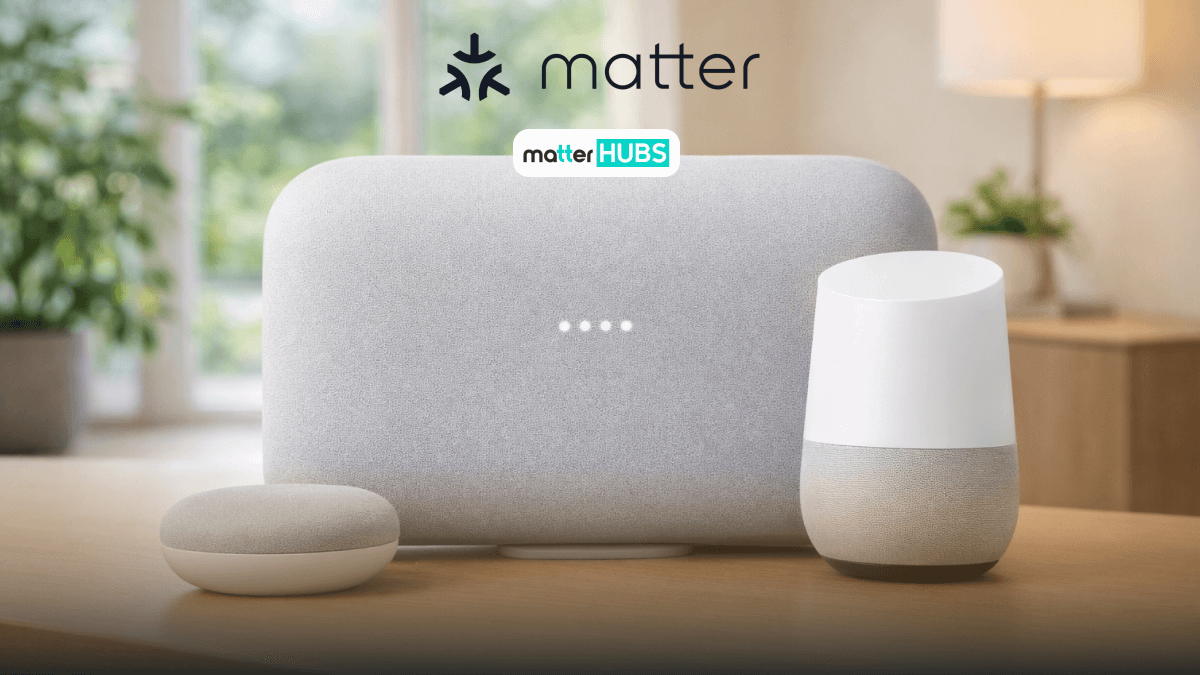
Google has integrated Matter deeply into Android and Google Home.
- Android 14+ supports built-in Matter onboarding.
- Many Nest devices act as Thread border routers.
- Improved Google Home app redesign.
- Hybrid local + cloud control.
Users can control Matter devices using Google Assistant voice commands and automate routines within the app.
See more: How to add any Google Home / Nest Matter devices to any smart home system
Alexa
Amazon Echo devices now support Matter across multiple categories.
- Echo speakers can act as Thread border routers.
- Alexa Voice Service communicates via Matter locally when possible.
- Expanded device category support in 2026.
This means you can use simple voice commands to control compatible devices regardless of brand.
Apple HomeKit
Apple integrated Matter support into iOS and its Home app.
With iOS 18:
- Some Matter devices can be added without a traditional hub.
- HomePod and Apple TV function as Thread border routers.
- Secure local processing enhances privacy and reliability.
Matter allows Apple users to mix HomeKit and Matter devices seamlessly in one interface.
Samsung SmartThings
SmartThings now automatically detects Matter devices.
- Auto-recognition in the SmartThings app.
- Multi-admin syncing across ecosystems.
- Reduced need for proprietary hubs.
This allows SmartThings users to access a broader range of devices without compatibility headaches.
What’s New in Matter? (2025–2026 Updates)
What’s New in Matter? (2025–2026 Updates)
Matter 1.4
This update gained a lot of attention because of how strengthened the foundation of the ecosystem instead of introducing new flashy features.
1. Improved Multi-Admin Architecture
Earlier versions technically supported multi-admin, but real-world performance wasn’t always smooth. For example, thanks to this update, a Matter light added to Apple Home can now sync more reliably with Google Home without reconfiguration.
Matter 1.4 improved:
- Device state synchronization across platforms.
- Conflict handling between ecosystems.
- Faster credential sharing.
- More stable onboarding between two controllers.
2. Expanded Device Category Support
Matter 1.4 widened supported device types, including:
- Enhanced sensor profiles.
- Advanced lighting control parameters.
- More detailed thermostat attributes.
- Additional controller device roles.
3. Improved Certification & Compliance Testing
The Connectivity Standards Alliance refined interoperability testing.
Results:
- Fewer ecosystem-specific bugs.
- Better firmware validation.
- More consistent user experiences.
Manufacturers now face stricter validation before certification, which significantly improves reliability for end users.
Matter 1.5
The best way to introduce Matter 1.5 would be as a functional expansion phase. The transition of expanding matter support from basic smart home devices to more advanced smart home products is a major shift that happened with this update.
1. Official Camera Streaming Support
One of the most requested additions. Matter 1.5 now allows compatible cameras to integrate into multiple ecosystems without requiring a separate smart home bridge.
Matter 1.5 introduced:
- IP-based camera streaming.
- Secure transport layer improvements.
- Standardized camera capabilities.
2. Energy Management Device Support
Energy management became a major priority in 2025–2026.
Matter 1.5 introduced support for:
- Energy monitoring devices.
- Smart meters.
- EV charging integrations.
- Battery storage systems.
- Load control devices.
This opens the door for:
- Whole-home energy dashboards.
- Smarter automation based on consumption.
- Solar and battery integration across platforms.
3. Improved Local Automation Support
Matter strengthened its local execution model, reinforcing one of its biggest promises: your smart home should continue working even if your internet connection goes down.
Improvements include:
- Better local scene triggering.
- Reduced cloud fallback behavior.
- More reliable state reporting.
- Faster device acknowledgment.
4. Faster & Smarter Onboarding
Device onboarding in early Matter versions could sometimes be inconsistent. With this update, commissioning failures dropped significantly compared to earlier releases.
New improvements include:
- Smoother QR code scanning.
- Simplified BLE commissioning process.
- Reduced onboarding time.
- Better error feedback during pairing.
Matter and Local Control: Why It Matters More Than Ever
One of Matter’s biggest advantages is local-first architecture.
This means:
- Automations can run even if the internet goes down.
- Faster response times.
- Better privacy.
- Reduced cloud dependency.
In real-world usage, this translates into:
- Lights turning on instantly.
- Locks responding faster.
- Sensors triggering automations reliably.
Local control is what separates a “connected” home from a truly smart one.
How Matter Changes Daily Smart Home Life
Matter simplifies your everyday smart home experience in practical ways:
1. One Device, Multiple Platforms
A single Matter device can be controlled from Apple Home, Google Home, and SmartThings simultaneously.
2. Mixed Ecosystem Households
Family members using different platforms can control the same devices.
3. Simplified Setup
QR-code onboarding eliminates complex pairing processes.
4. Reduced App Clutter
Most devices can now be managed on one primary platform.
5. Futureproofing
Final Thoughts
Matter has changed the direction of the smart home industry. Instead of choosing ecosystems, you can now focus on choosing the best devices. Because Matter has already guaranteed you that they will work together. So, if you're planning your next smart home upgrade, choosing Matter-compatible devices isn’t just a safe option; it’s the smartest one.
FAQs
Matter uses Internet Protocol (IP) to communticate between devices. The devices that comply with Matter use ethernet, Wi-Fi or thread.
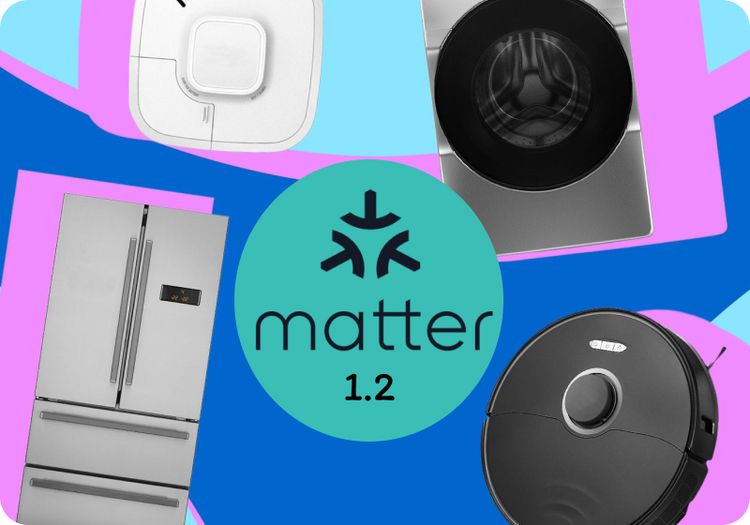
The products include lights, heating, sensors, homeware, door locks etc.
Yes. The Matter is connected to other smart home protocols through bridges. These bridges can translate from Matter to other protocols. This allows the contibued usage of existing devices.
You have to stay up to date with the new releases and updates of Matter through the official website and other official sites. And Matter updates through over-the-air (OTA) updates.
Security is one of the core concerns of Matter. This includes authentication of devices that join the network, message encryption and usage of standard cryptographic algorithms.