Matter Smart Home Standard 1.2 arrived with 9 New Device Types and Enhancements
6 months ago • 5 min read
The world of smart homes is about to undergo a significant transformation with the release of Matter 1.2. This IoT connectivity standard is designed to revolutionize the way our smart devices interact with each other. In this article, we'll explore the latest updates in Matter 1.2 and what they mean for your smart home.
What Is Matter 1.2?
Matter 1.2 is an update to the Matter IoT connectivity standard that focuses on expanding device support and improving the interoperability of smart home devices.
Earlier versions of Matter mainly supported core device types such as smart lights, smart plugs, locks, and thermostats. However, the smart home ecosystem includes many more types of appliances.
Matter 1.2 addresses this by introducing support for several new device categories, allowing more smart home products to integrate seamlessly into a unified smart home system.
What are the New Device Types Introduced in Matter 1.2?
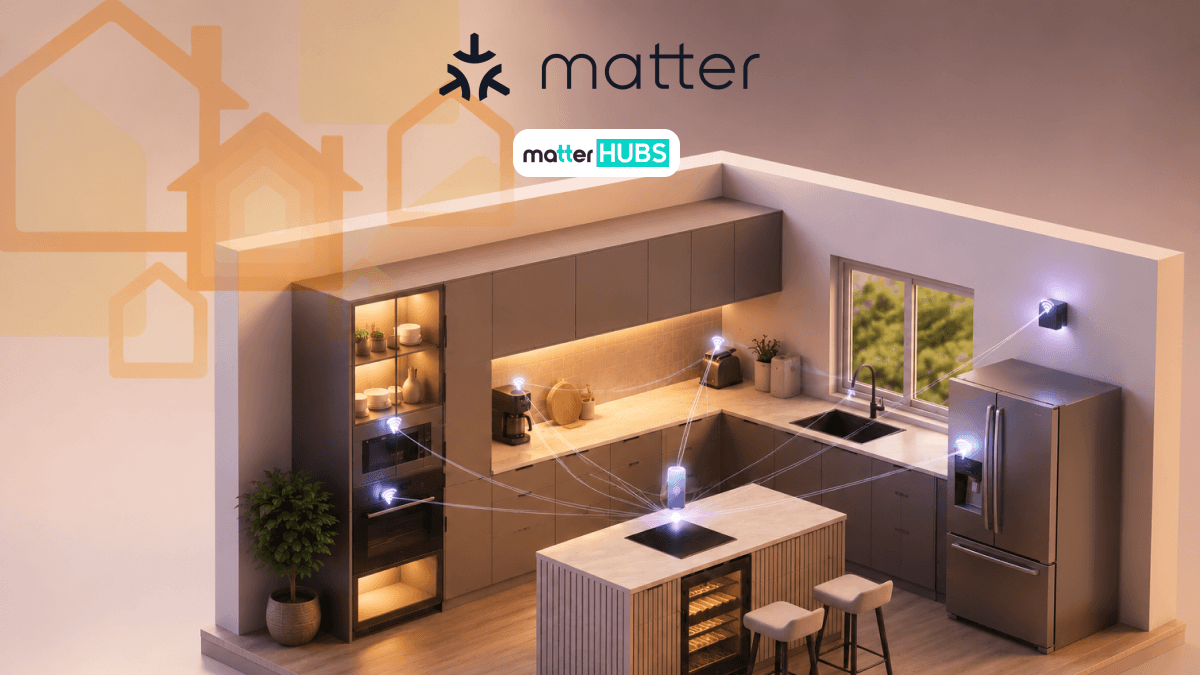
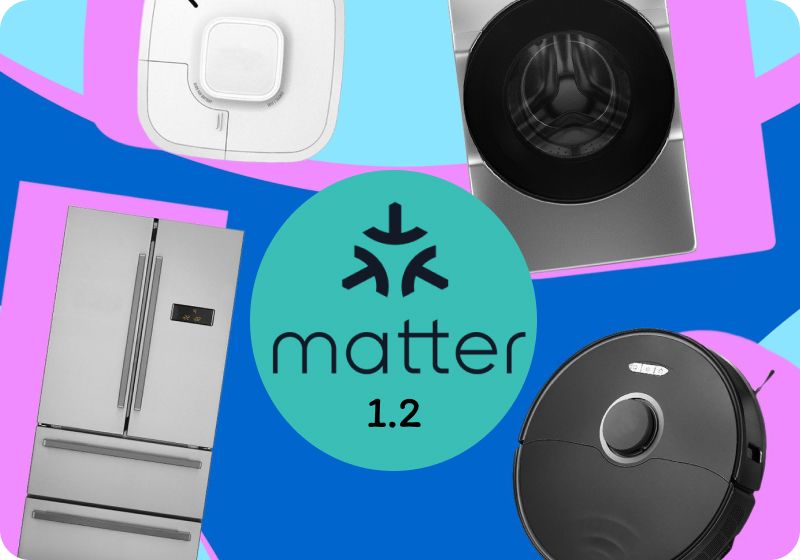
One of the most significant changes in Matter 1.2 is the addition of nine new smart home device types. These devices represent common household appliances that can now participate in a Matter-enabled smart home.
Refrigerators
Matter 1.2 allows refrigerators to integrate into smart home systems with features such as temperature monitoring and control. This support also extends to specialized refrigeration units like wine coolers and kimchi compartments.
Manufacturers such as Bosch and Siemens have already started exploring Matter integration for their smart appliances.
Dishwashers
Dishwashers can now send notifications and status updates through Matter.
For example, users can receive alerts if:
- The dishwasher door is not properly closed.
- There is a water supply problem.
- The cleaning cycle has completed.
This improves monitoring and automation within a Matter smart home environment.
Laundry Washers
Matter 1.2 adds support for washing machines, allowing them to transmit progress updates and completion notifications.
Users can monitor washing cycles remotely through their smart home platforms. Future updates are expected to include expanded support for tumble dryers as well.
Air Purifiers
Air purifiers can now operate within the Matter ecosystem and integrate with other air quality devices.
Matter 1.2 enables:
- Fan speed control.
- Monitoring of filter conditions.
- Integration with air quality sensors.
Both HEPA filters and activated carbon filters can be monitored through the smart home system.
Room Air Conditioners
Standalone air conditioners are now supported by Matter 1.2.
Users can control:
- Temperature settings.
- Fan speed.
- Operating modes.
This allows air conditioning systems to become part of broader smart home automation routines.
Robot Vacuum Cleaners
Matter 1.2 introduces support for robot vacuum cleaners, which are becoming increasingly popular in modern smart homes.
Users can:
- Start cleaning remotely.
- Monitor cleaning progress.
- Switch between vacuuming and mopping modes.
Manufacturers such as SwitchBot have announced plans to update their devices to support the Matter standard.
Fans
Fans are now recognized as a separate device category within the Matter ecosystem.
New supported features include:
- Oscillation control.
- Natural wind simulation.
- Reversible airflow direction.
- Step-by-step speed adjustments.
This allows fans to be integrated into smart home automation routines.
Air Quality Sensors
Matter 1.2 expands support for air quality monitoring devices.
These sensors can measure multiple environmental factors, including:
- Particulate matter.
- Carbon monoxide.
- Air quality index (AQI).
- Humidity and pollutants.
This allows smart home systems to respond automatically to changes in air quality.
Smoke and Carbon Monoxide Alarms
Safety devices are also part of the Matter 1.2 update.
Smoke and carbon monoxide alarms can now integrate with smart home platforms and provide features such as:
- Automatic self-testing.
- Battery status monitoring.
- Real-time alerts.
This improves home safety and monitoring capabilities.
If you're wondering about Samsung's SmartThings, you may find out more about Samsung's SmartThings Multi-Hub Network.
What are the Additional Improvements in Matter 1.2?
Matter 1.2 also introduced several smaller improvements that enhance the overall functionality of the protocol.
1. Device Appearance Descriptions
Devices can now report visual characteristics such as color and finish, helping smart home platforms display devices more accurately.
2. Device Compositions
Devices with multiple components, such as complex light fixtures or multi-switch panels, can now be grouped hierarchically for easier management.
3. Semantic Tags
Semantic tags help ensure consistent behavior across different platforms by defining the purpose of device controls.
This improves usability across ecosystems like Google Home and other smart home platforms.
4. Generic State Descriptions
Matter 1.2 introduced standardized descriptions for device states. This allows developers to create new device types more easily while maintaining compatibility with existing smart home platforms.
What Happened After Matter 1.2? (New Updates)
Since the release of Matter 1.2, the Connectivity Standards Alliance has continued improving the protocol with newer versions.
Matter 1.3
Released in 2024, Matter 1.3 focused on energy management features and improvements in device interoperability.
This version introduced better support for energy monitoring and management devices, helping users optimize energy usage in smart homes.
Matter 1.4
Matter 1.4 introduced improvements to multi-admin functionality, making it easier for devices to work across multiple smart home ecosystems simultaneously.
It also improved reliability and device certification processes.
These aren't the only changes that happened with this update. You can figure out more by Understanding Matter 1.4 for Smart Home Automation.
Matter 1.5
Matter 1.5 further expanded the ecosystem by introducing support for camera streaming and advanced security devices.
This update significantly expanded the capabilities of the Matter ecosystem, bringing more categories of smart home products into the standard.
If you feel like finding out Matter 1.5: What’s New and Why it Matters for Smart Homers.
The Future of Matter Smart Homes
The Matter ecosystem continues to grow rapidly. Major platforms including Google Home, Apple Home, Amazon Alexa, and Samsung SmartThings are expanding support for the standard.
As more manufacturers adopt Matter, users can expect:
- Improved device compatibility.
- Easier device setup.
- Better cross-platform automation.
- Stronger integration between smart home devices.
These developments are bringing the industry closer to the goal of a fully interoperable smart home environment.
Also, Tapo Smart Plug Mini, Mediola Matter Bridge, and many other devices are Matter-supported.
How is Matter answering the smart home users' questions with Matter 1.5: What’s New and Why it Matters for Smart Homers.
Matter's Mission
In 2022, the Connectivity Standards Alliance (CSA) introduced Matter as a fresh standard for smart home connections. Its goal was to get rid of the problems related to different devices not working together in smart homes. Then, in April 2023, they rolled out Matter 1.1, a sort of "update," which made small improvements to Matter-certified products.
Conclusion
Matter 1.2 is not merely an update; it's a significant leap forward, expanding the possibilities for smart home automation and enhancing user experiences across a wide range of devices. The future of smart homes is looking brighter than ever, thanks to these exciting developments in the Matter standard.
FAQs
The ZigBee protocol is known for their stable connection and it creates an efficient wireless connection. It consumes a lesser bandwidth but Matter is the better when it comes to security and Matter can work with any device that supports WiFI, BlueTooth or Thread.
Matter devices that use Wi-fi and Ethernet does not require a hub for communication.
Matter offers a free services and they also provides a premium service.