Matter Smart Home Protocol: What's It All About?
7 months ago • 7 min read
Your smart home didn’t suddenly get smarter by accident. Behind the scenes, a quiet protocol called Matter. It’s an open smart home standard developed by the Connectivity Standards Alliance. This smart home standard allows smart devices from different brands to work together locally, securely, and without being locked into one ecosystem. If you are excited to know more about the Matter protocol? Then this article is for you!
What is the Matter Protocol?
Matter protocol was previously distinguished as Project Connected Home over IP (Project CHIP). It is a freely available connectivity standard for smart home mechanisms. Matter is supported by main manufacturing corporations like Apple, Google, and Amazon. It intends to overcome interconnectivity encounters by requiring a mutual language for smart devices. This specification is constructed on the theories of protection, consistency, and ease.
What are the Major Characteristics of Matter Smart Home Standard?
- Interconnectivity
- Safety
- Consistency
- Ease
Matter's main objective is to allow devices to work together without any effort. It permits users to select devices based on partiality instead of compatibility relates.
Safety is one of the highest importance of Matter. Paying attention to safety is vital in a period where the linked devices in residences are continually rising.
Consistency increases the complete user capability. Through this, it yields smart homes further approachable and user accessible.
The practice highlights ease in both system and handling. This ease increases to designers, making it simpler.
Read about how Matter features have evaluated withe their new update on Matter 1.5: What’s New and Why it Matters for Smart Homers
HowMatter Smart Standard Function in Smart Homes?
- Extended Environment
- Zigbee and Thread Incorporation
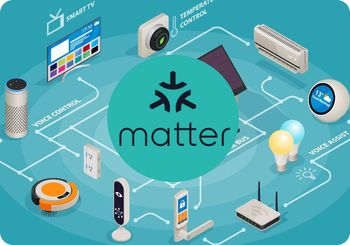
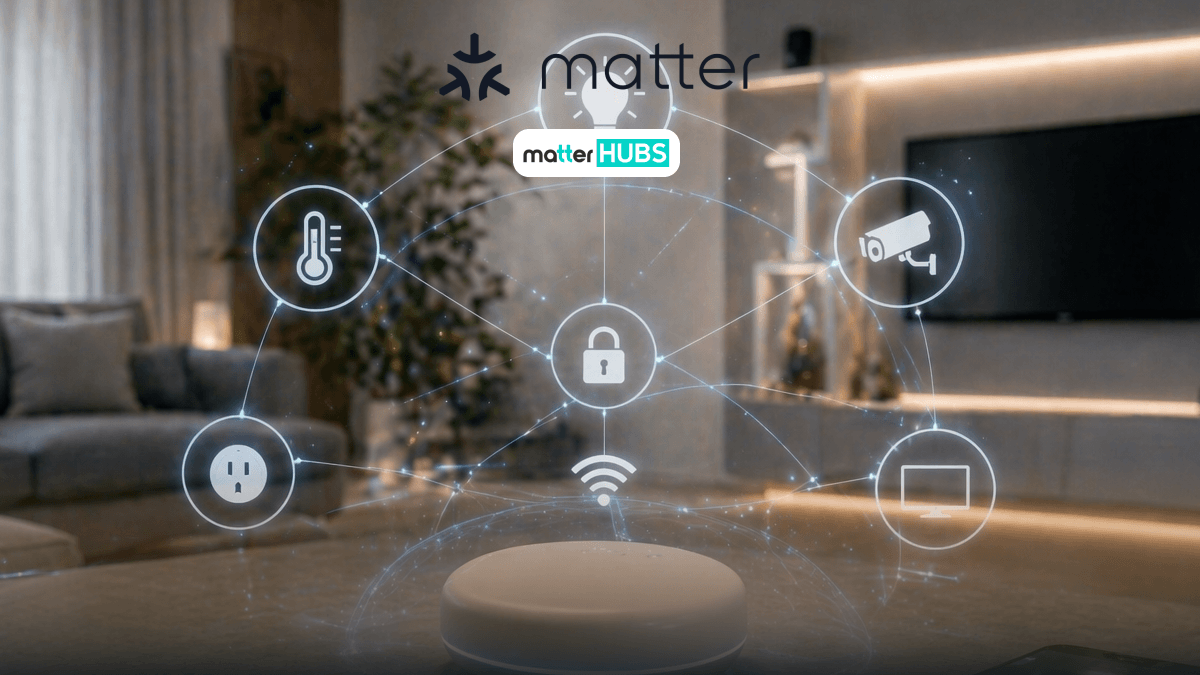
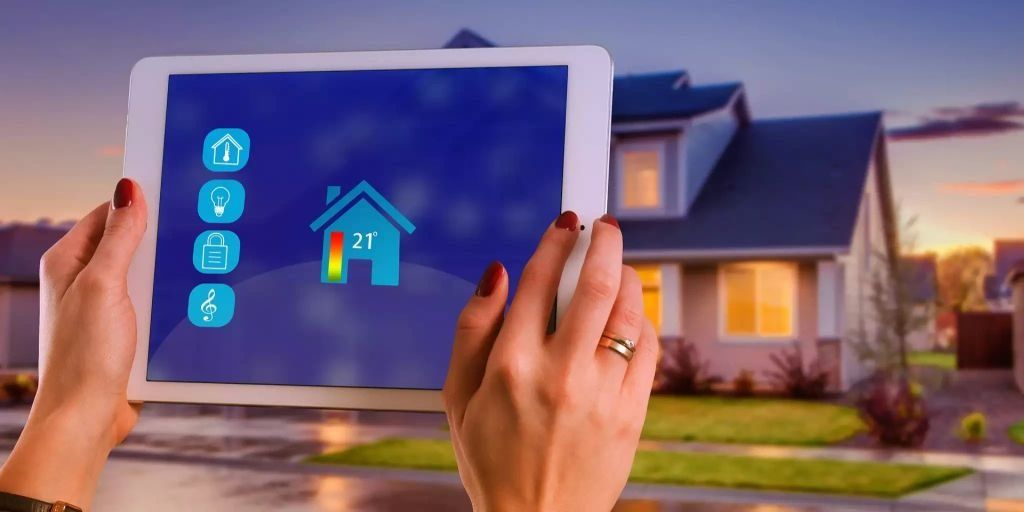
Matter permits a wider and extra varied scale of gadgets to be effortlessly combined into smart home systems. This comprises smart lighting systems, thermometers, light switches, smart hubs, smart plugs and more.
Matter constructs upon remaining requirements such as Zigbee and Thread. This incorporation accepts a broad scale of gadgets to enhance Matter-companionability.
If you want to know about difference between matter and zigbee, check out Matter vs. Zigbee: Difference between Matter and Zigbee article.
Want to smarten up your smart home with the 1Home Server KNX. Check out 1Home Server for KNX with Matter Support article.
Who are the Manufacturers that are Matter-Supported?
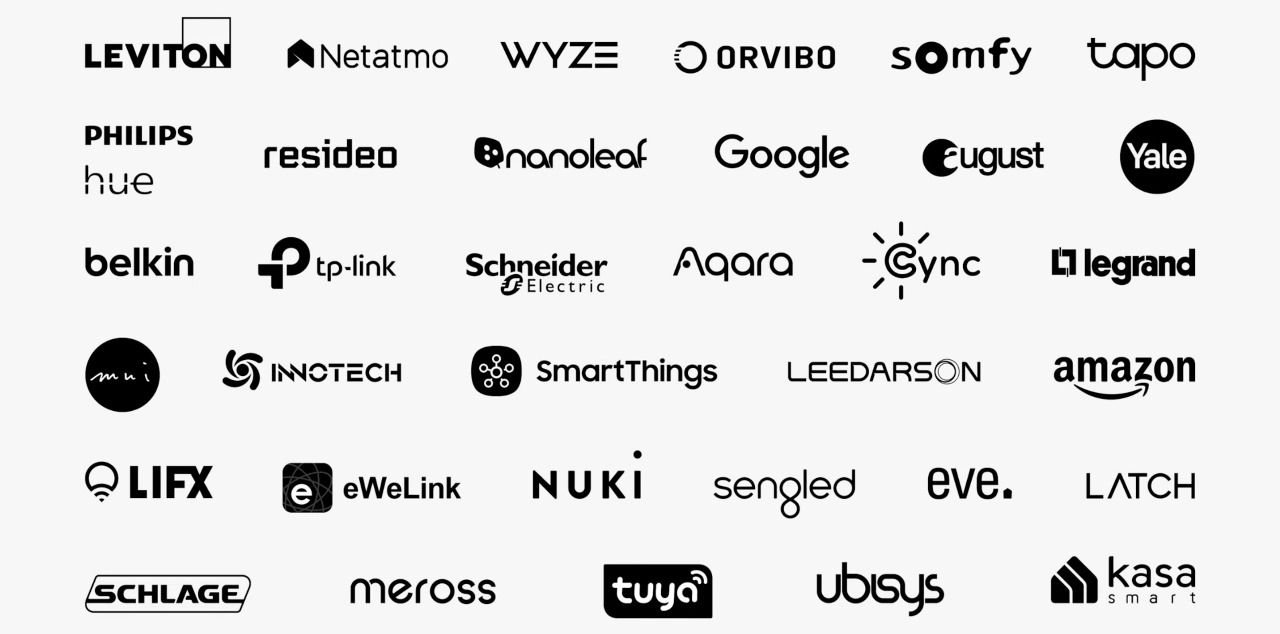
- Philips Hue
- Amazon
- Apple
- Schneider Electric
- Zigabee Alliance
- Silicon Labs
Best IKEA Matter Devices and Integration Guides
Learn best IKEA Matter devices and learn how the DIRIGERA hub enables Matter over Thread integration with Google Home, Home Assistant, and more.
 Sarah Diyana
Let’s figure out how Amazon, Google, and Apple are supporting Matter
1. Amazon
- Corporation and Alliance
- Incorporation with Alexa
Amazon has been keenly engaged in the Connectivity Standards Alliance (CSA). The CSA intends to foster the expansion and acceptance of Matter throughout the industry.
Alexa is a leading characteristic in several smart home environments. Amazon has conveyed dedication to incorporating Matter into Alexa-empowered devices.
2. Google
- Partnership with the Connectivity Standards Alliance (CSA)
- Integration with Google Assistant
Google is also an effective partner of the Connectivity Standards Alliance. It aids the expansion and advancement of the Matter protocol.
Google Assistant is a broadly managed voice assistant. Google has executed integration Matter into its environment.
3. Apple
- Contribution to Matter Growth
- Combination with HomeKit
Apple has performed a fundamental role in the expansion of Matter. Apple’s involvement in safety and security confirms that these theories are inserted in the Matter protocol.
HomeKit is set to support Matter. It suggests a consistent and integrated matter smart home capability.
What is Matter-Supported Smart Home Devices?
- Matter-Supported Smart Light Systems
- Matter-Supported Smart Thermometers
- Matter-Supported Smart Amplifiers
- Matter-Supported Smart Bells
- Matter Supported Smart Camera Systems
- Matter-Supported Smart Machines
- Matter-Supported Smart Keys
- Matter-Supported Smart Hub Systems
- Matter-Supported Smart Sockets
- Matter-Supported Smart Plugs
- Matter-Supported Smart Curtain Systems
Check out more on how Matter-Protocol works: How Does Matter Smart Home Protocol Works?
Pros and Cons of Matter Protocol
Pros
- Interconnectivity
Matter is proposed to improve interconnectivity between smart home devices. This permits consumers to develop varied environments with no worries about compatibility concerns.
- Assistance in the industry
Main manufacturing firms, like Amazon, Google, and Apple back Matter. This wide support improves the probability of extensive implementation and varied scope of friendly devices.
- Accessible Standard
Matter is a freely available software. This assists designers and producers in participating in its advancement and completion.
- Attention to the protection
Matter ranks a powerful importance on protection. It merges strong encoding and verification processes to guarantee privacy and safety.
- Combined language
The protocol grants a combined language for smart home gadgets. This unity can make the way to an extra unified and user-accessible smart home environment.
- In reverse compatibility
Matter assembles upon remaining specifications such as Zigbee and Thread. It guarantees in-reverse compatibility. This grants gadgets which are employing these practices to be adjusted to aid Matter.
Cons
- Encounters in adoption
The success story of Matter depends on prevalent implementation by producers. A substantially varied collection of corporations adopting the standard and renewing their remaining devices might stand as a contest.
- Period of change
Through the changing period, remaining smart home devices might not be compatible. So, the Clients may be required to substitute or modernize their devices.
- Challenging guidelines
The smart home concept has numerous challenging standards. The reconciliation of these specifications could lead to breakup and uncertainty for purchasers.
- Complicated execution
Executing Matter throughout a broad scale of devices might be complicated. Also, some producers may encounter technical challenges.
- Dependency on industry cooperation
The accomplishment of Matter relies on the cooperation of key industries. It might affect the development and operation.
- Restrained functionality
Some unique producers may make bounds for selected operations to separate their produce. This might lead to differences in user capability through various brands.
Also, if you want to know about best matter IoT Devices ckeck; Best Matter IoT Devices article.
How Has Matter Changed from the Beginning to 2026?
1. Initial Rollout
- Matter 1.0 – The first official release introduced support for core smart home devices, including lights, plugs, switches, thermostats, door locks, blinds, and sensors.
- Matter 1.1 – This update focused mainly on bug fixes and stability improvements rather than major feature additions.
2. Broadening Device Support
- Matter 1.2 – Expanded support for additional smart home device types including refrigerators, robot vacuums, air purifiers, alarm sensors, and fans.
- Matter 1.3 – Added water and energy management devices, along with support for more appliances such as ovens and dryers.
3. Refinements & Bigger Features
- Matter 1.4 – Expanded support for EV chargers, solar systems, batteries, and heat pumps, while also improving Thread networking reliability.
- Matter 1.4.1 & 1.4.2 – Introduced useful refinements such as NFC/tap-to-pair onboarding, multi-device QR setup, and enhanced security and certification processes.
4. Big Feature Expansion with Matter 1.5
- Official Camera Support – Enabled live streaming and audio integration through Matter-compatible devices.
- New Device Categories – Added support for closures (garage doors, awnings), soil moisture sensors, and advanced energy management systems.
Security is one of the fastest-growing areas in the Matter ecosystem, particularly with camera integration. Here’s a deeper look at what’s coming: Matter Security Cameras: The Future of Smart Home Security
These updates clearly demonstrate the evolution of Matter as a smart home standard. It has progressed beyond basic device compatibility into a comprehensive whole-home automation framework designed to meet modern user expectations.
Conclusion
Matter has already proven that in the future of smart home evaluation it will remain as a main character. Through this article we focused on things like real-world compatibility and device categories currently supported by Matter. The final question is Matter, right for your smart home? If you are a fan of mixing brands and ecosystems while building your smart home automation. Then YES! Matter is useful for your growth.
Frequently Asked Questions about Matter Smart Home
FAQs
Matter is an open and freely available connectivity standard designed to improve interoperability between smart home devices. Unlike other specifications, Matter provides a unified communication language that allows devices from different manufacturers to work together seamlessly.
Major companies such as Apple, Google, and Amazon support Matter. Their involvement represents a collaborative effort to create a unified smart home standard, giving users broader compatibility and long-term ecosystem stability.
Matter is designed to be backward compatible with existing technologies such as Zigbee and Thread. This allows many current smart home devices to integrate more easily into the Matter ecosystem.
Security is a top priority for Matter. The protocol incorporates strong encryption, device authentication, and secure onboarding processes to protect user privacy and prevent unauthorized access.
Matter is positioned as a key technology for the future of smart homes. By working alongside protocols like Thread and existing ecosystems, it aims to simplify device compatibility and create a more unified smart home experience.
Yes. Matter devices can use Wi-Fi, typically operating on the 2.4 GHz frequency band. Matter can also run over Thread and Ethernet, depending on the device type and network setup.