How to Set Up Google Home with Matter in 2026
4 hours ago • 6 min read
If you’re setting up a Google smart home, enabling Matter is no longer optional. It’s essential. Google Home Matter is the easier, faster, and more reliable upgrade for your smart home. All you have to do is get a compatible Nest hub or Android device running the latest software. And then follow the steps below. Let's get started!
What Is Google Home Matter?
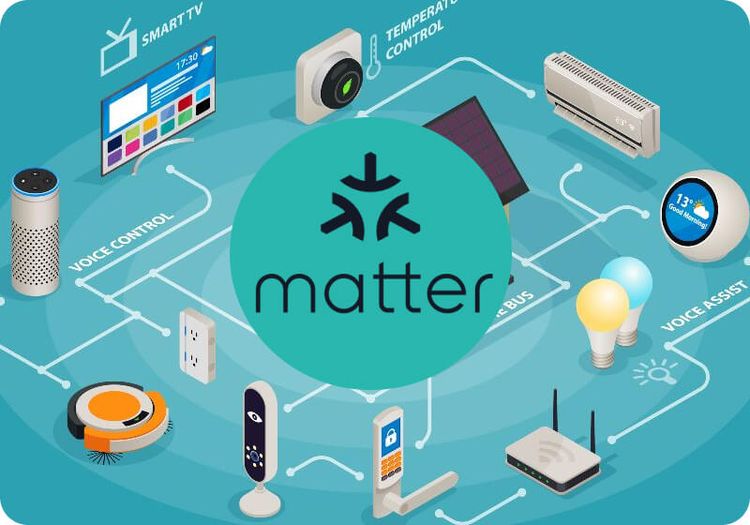
Google Home Matter refers to Google’s implementation of the Matter smart home standard inside the Google Home ecosystem. Matter allows compatible smart devices such as lights, plugs, thermostats, locks, and robot vacuums to communicate securely and locally across different platforms.
When using Google Home Matter:
- Devices connect to Wi-Fi or Thread.
- Commands can be executed locally.
- You can integrate with Google Assistant.
- Multi-admin pairing is supported.
This means your google smart home is no longer locked into a single brand ecosystem.
What You Need Before Setting Up Google Home Matter?
1. A Matter-Compatible Device
Look for official Matter certification on product packaging.
2. Matter Controller
In the Google ecosystem, this can be:
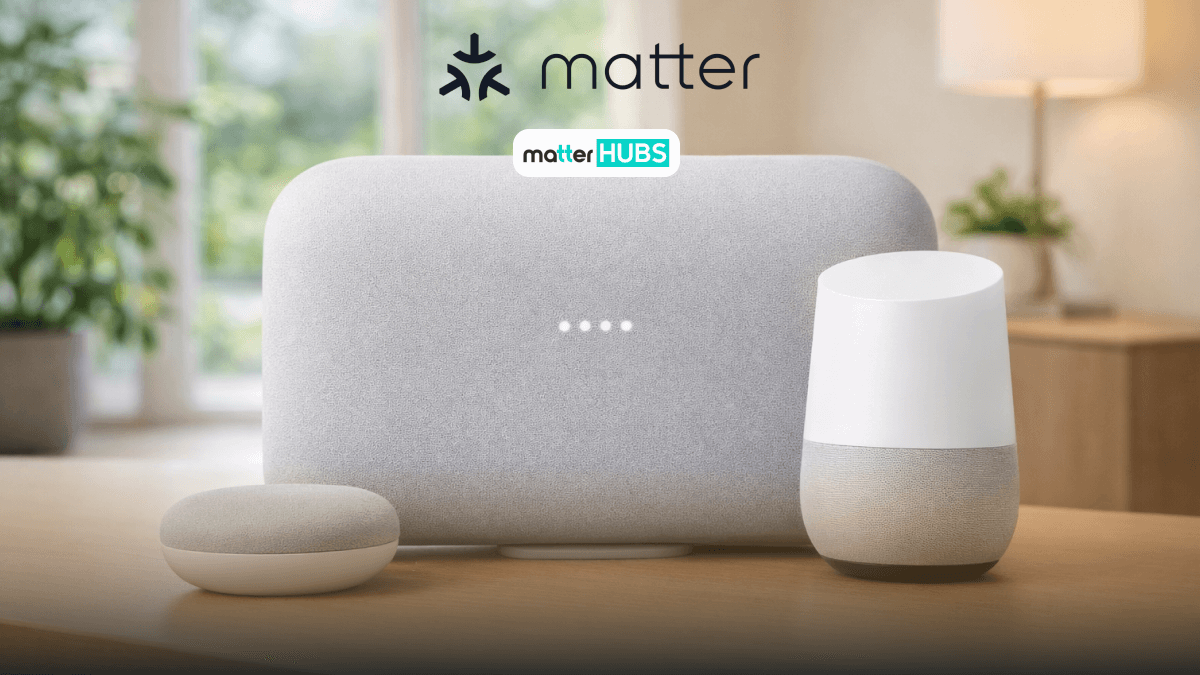
- Nest Hub (2nd Gen)
- Nest Hub Max
- Nest Wi-Fi Pro
- Compatible Android phone (Android 14 or newer)
These devices allow Google Home Matter to function properly.
3. Updated Google Home App
Make sure your Google Home app is updated to the latest version.
4. Updated Firmware
Ensure that both your Nest device and your Matter device have updated firmware.
If you’re unsure which device can act as a reliable Matter controller, our breakdown of the Best Matter Enabled Thread Hubs of 2026 will help you make an informed decision.
For users who don’t already own a compatible controller, check out the Onesmart Smart Home Hub offers a convenient solution for managing Matter devices.
Step-by-Step: How to Set Up Google Home Matter
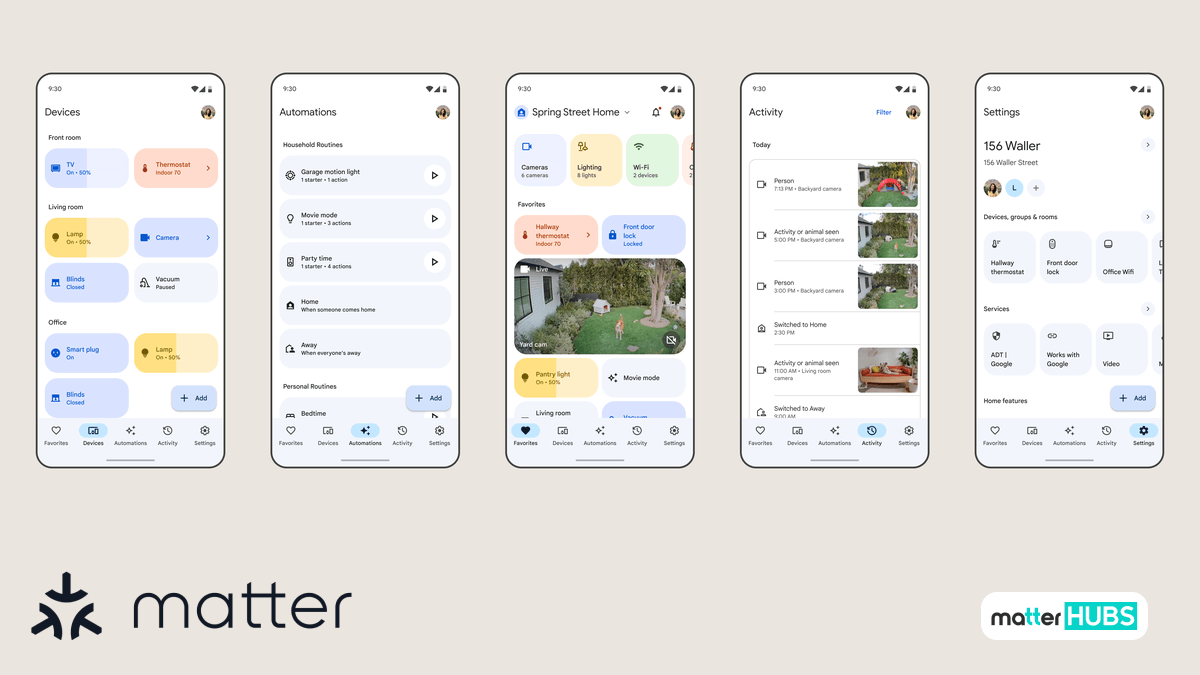
Step 1: Open the Google Home App
Start by launching the Google Home app on your Android or iOS device. Make sure you’re signed in with the correct account connected to your Google smart home. Matter onboarding improvements are frequently delivered through updates, so ensure your app is up to date.
Step 2: Tap “+ Add” → “Set up device”
At the top of the Google Home app, tap the “Add” button. Then select “Set up device” → “New device.”
Your phone will begin searching for nearby Matter-enabled smart devices.
Step 3: Scan the Matter QR Code
Every Matter device includes a QR code or a manual pairing code.
Inside the Google Home app, select the option to scan the QR code. Your phone camera will activate.
This is the standard commissioning process used for Google Home Matter.
Step 4: Assign the Device to a Room
After pairing:
- Choose the room (Living Room, Bedroom, etc.).
- Name the device.
Room assignment allows your Google Assistant to understand contextual commands.
Step 5: Confirm Device Status
Once added, test the device:
- Turn it on or off.
- Adjust settings.
- Use voice commands.
If everything responds quickly, your Google Home Matter setup is complete.
How Google Assistant Works with Matter Devices?
Once connected, your Google Assistant can control Matter-compatible smart devices naturally.
Examples:
- “Hey Google, start the robot vacuum.”
- “Hey Google, turn off all lights.”
- “Hey Google, set temperature to 22 degrees.”
Because Matter supports local execution, many commands respond faster compared to older cloud-only integrations.
Using Nest Devices as Matter Controllers
Your nest home devices play an important role in Google Home Matter.
Supported Nest devices can:
- Act as Matter controllers
- Function as Thread border routers
- Maintain local network communication
This means your Google smart home can continue functioning even if internet connectivity drops temporarily. The Nest Hub (2nd Gen) and Nest Wi-Fi Pro are particularly important for Thread-based Matter devices.
The Nest Hub (2nd Gen) and Nest Wi-Fi Pro are particularly important for Thread-based Matter devices, as explained in How to Set Up a Smart Home Hub with Google TV Streamer!
How Google Home Matter Improves Your Smart Home?
1. Unified Control
One of the biggest improvements Google Home Matter brings to your Google smart home is centralized control. All compatible smart devices appear inside the Google Home app. This makes your smart home system more organized. Regardless of the device type, Google Home Matter ensures everything lives within the same interface.
2. Faster Response Times
Another major benefit of Google Home Matter is improved responsiveness. Because Matter enables local-first communication, many commands execute instantly. This reduced latency significantly enhances the overall experience of your Google smart home.
3. Cross-Platform Compatibility
You can integrate the same Matter device with Google Home, Apple Home, or SmartThings. Before Matter, choosing a smart home ecosystem often meant committing to it long term. Thanks to multi-admin capability, ecosystem lock-in is greatly reduced.
4. Improved Automation
Google Home Matter allows deeper automation within your smart home. You can create routines such as:
- Start the robot vacuum when everyone leaves.
- Turn on lights when motion is detected.
- Lock doors at bedtime.
Troubleshooting Google Home Matter Setup
1. QR Code Won’t Scan
If the QR code fails during setup:
- Make sure Google Home has camera permissions enabled.
- Try entering the manual pairing code instead of scanning.
- Perform a full factory reset to return the device to commissioning mode before retrying.
Partial pairing attempts often prevent the device from re-entering setup mode properly.
2. Device Pairs But Shows “Offline”
If the device appears in Google Home but stays offline, the issue is usually network related.
Check for:
- IPv6 disabled on your router (Matter relies on IPv6).
- Multicast or mDNS blocked in advanced router settings.
- AP isolation enabled.
- The device connected to a guest network instead of your main Wi-Fi.
3. Thread Device Is Unstable
If a Thread device pairs but disconnects randomly:
- Confirm that your Nest Hub or Nest WiFi Pro is acting as an active Thread border router.
- Avoid running multiple separate Thread networks across different ecosystems.
- Reboot the Nest device to refresh the Thread routing table.
Thread instability is often caused by topology conflicts rather than device defects.
4. Matter Fabric Conflict
If the device was added to another ecosystem first (Apple Home, SmartThings, etc.), you may encounter fabric conflicts.
Fix it by:
- Remove the device from all ecosystems.
- Perform a full factory reset.
- Re-add it to Google Home first.
Improper removal between ecosystems can cause syncing issues.
How Google Home Matter Compares to Other Platforms?
Google’s Matter implementation focuses on:
- Deep Google Assistant integration.
- Android-native onboarding.
- Voice-first control.
- Hybrid local-cloud reliability.
While Apple emphasizes privacy and Home Assistant emphasizes advanced automation, Google excels at simplicity and AI-driven control.
Future of Google Home Matter
Google continues refining its home system to align with the evolving Matter standard. This means we can expect,
- More native Matter devices.
- Improved camera integration.
- Energy management support.
- Faster multi-admin syncing.
To get a better understanding about how Matter has expanded their compatible devices list, take a look at how Matter 1.5: What’s New and Why it Matters for Smart Homers.
Final Thoughts?
Setting up Google Home Matter in 2026 is straightforward and highly beneficial for anyone building a modern Google smart home. With stronger local execution, better Nest integration, and seamless Google assistant control, Google has positioned itself as a leader in accessible smart home automation. If you want a reliable, voice-powered home system that supports cross-platform compatibility, Google Home Matter is a powerful foundation.
FAQs
Google Home Matter is Google’s integration of the Matter smart home standard within the Google Home ecosystem, allowing compatible devices to work seamlessly across supported platforms.
For Thread-based Matter devices, yes. A compatible Nest device acts as a Thread border router and enables proper communication within your smart home network.
Yes. Google Assistant works seamlessly with Matter-compatible smart devices for voice control and automation.
Yes. Matter uses encrypted communication, secure device authentication, and a local-first architecture to enhance privacy and security.